
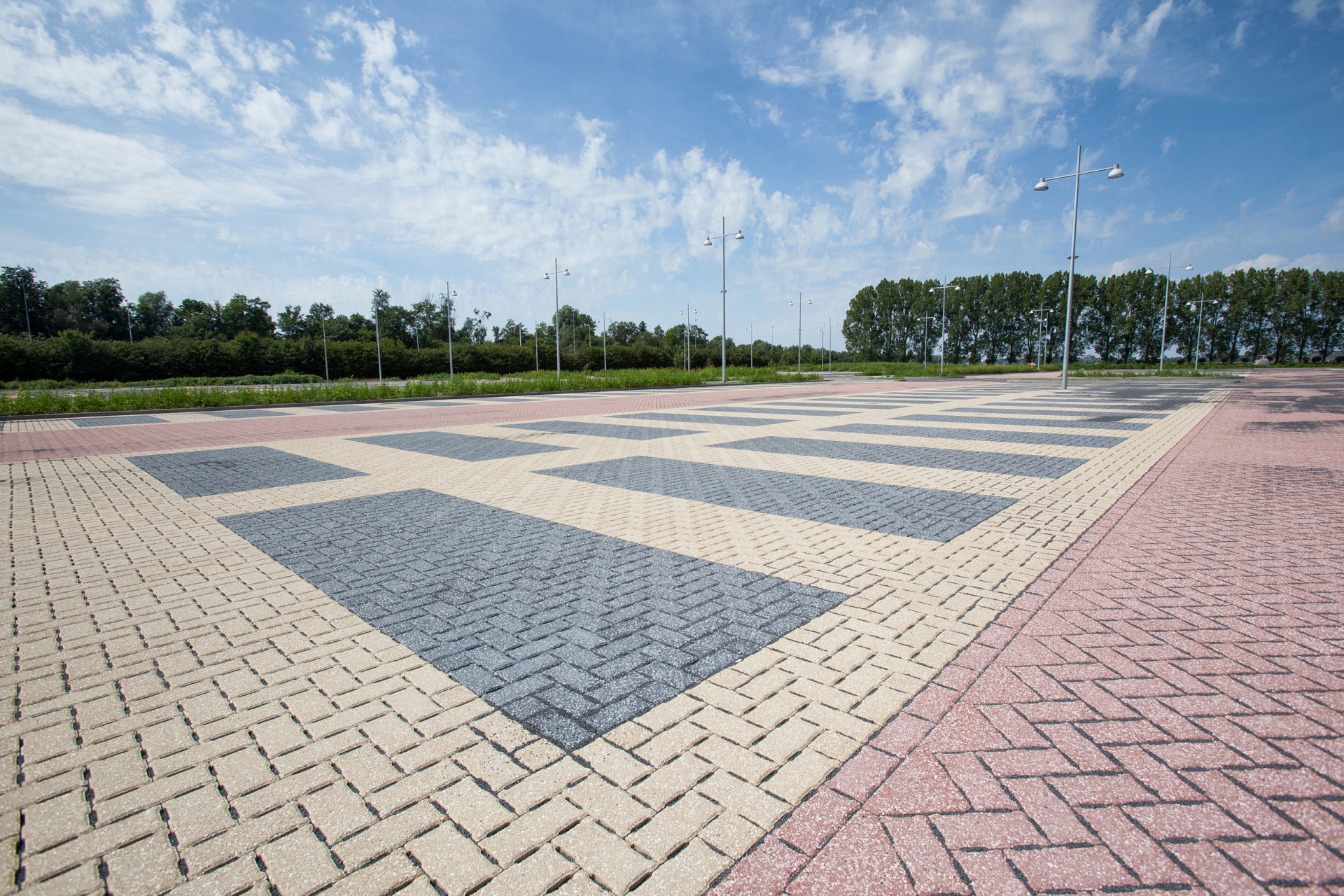
Mechanised packages make it possible to pick up a complete layer of concrete blocks using a paving machine and lay them on site. As a local authority client, you lay an important foundation for this method through the design and the tender process. The package must be suited to the chosen bond pattern, the size of the blocks, the machine and the space available on the construction site. The contractor and site planner then translate these principles into equipment, logistics and execution.
What is a machine-laid package?
In a machine-laid package, the concrete blocks are arranged in layers in a fixed configuration. The paving machine picks up such a layer using a clamp or vacuum system and places it on the prepared road surface. Fitting pieces, junctions, bends, drains and other interruptions may also require manual work.
The package configuration therefore determines more than just the method of delivery. It has a direct influence on how the bond pattern can be laid and on the amount of manual work required alongside the machine. CROW therefore recommends assessing the design, equipment, package configuration and remaining manual work in conjunction with one another.
Why you should decide on the paving block layout during the preparation stage
A street profile with many bends, interruptions or changes in the laying pattern requires a different approach to a long, straight section. Access to the site is also a factor. The machine must be able to reach the paving blocks, and there must be space for unloading, manoeuvring and working safely. You should therefore agree on the following before placing an order:
- the block size and the desired texture;
- the laying pattern and the direction in which it will be laid;
- the batch size and the orientation of the layers on the pallet;
- the type of machine and the clamping or vacuum system;
- unloading points, temporary storage, delivery route and phasing;
- filler pieces, edge trims and other remaining manual work.
This ensures that it becomes clear at an early stage whether the design and execution are compatible. The contractor can then work out the working method and equipment specifically for the project.
What machine packages does MBI supply?
MBI supplies six commonly used machine package configurations from its own instruction sheet for the mechanical application of paving elements. The information below will help you to begin project discussions. Before placing an order, please do check which configuration is suitable for the chosen product, size, thickness, texture and method of installation.
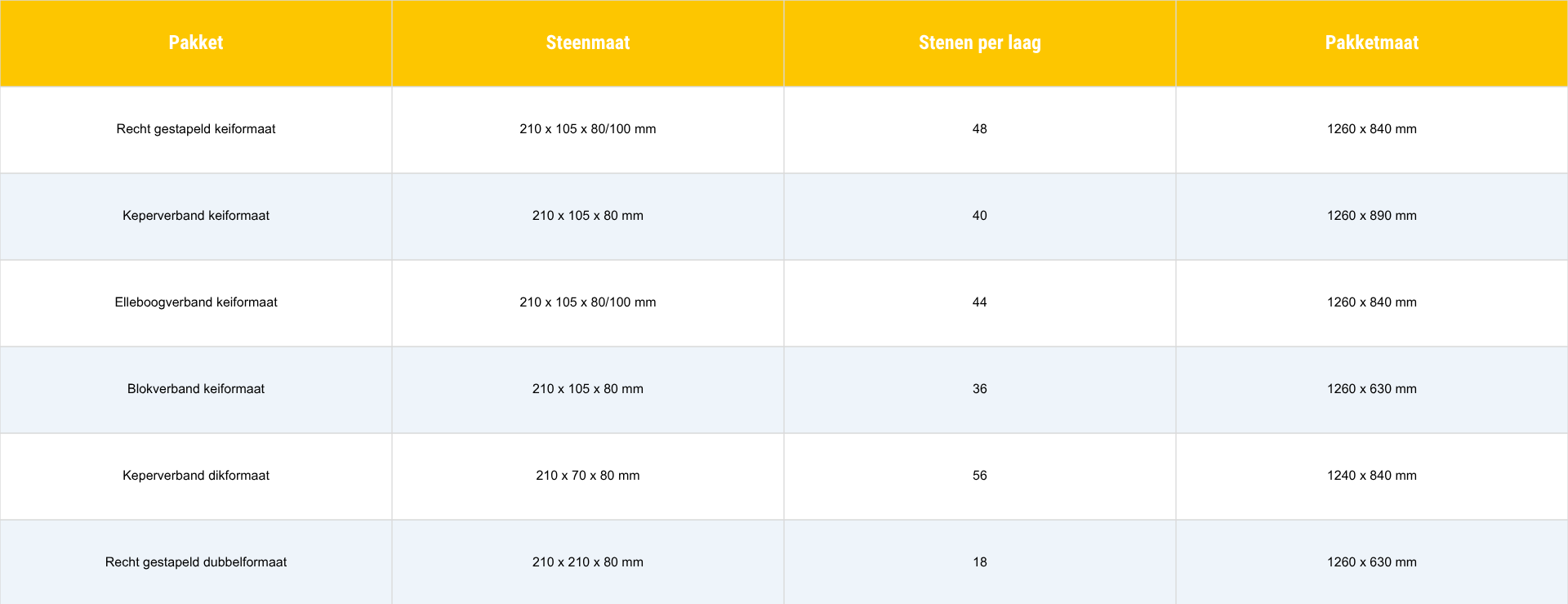
According to the instruction sheet, a neatly stacked pack can be laid in a half-brick bond on site. You should discuss with the installer and MBI whether this is the correct method for your project and materials before placing your order.
Is every machine-handling bundle suitable for every machine?
No. The bricks, the bundle configuration and the gripping method must all be compatible. A standard clamp is not automatically suitable for every brick shape or every bond pattern. Vacuum handling also depends on the product and the specific design.
The NCB Brick illustrates why this check is necessary. The current handling instructions specify, for mechanical handling, a mechanical clamp that feeds the standard bundle into a half-brick bond. For NCB Type 2 and Type 3, the instructions also state that a vacuum clamp may be used. This is product-specific information, not a general rule for other MBI bricks.
Therefore, before commencing work, check the following together with the installer:
- which layer the machine picks up in one go;
- on which sides the clamp grips;
- whether the layer needs to be shifted or rotated;
- which half-bricks or fitting pieces are required;
- whether a test area is needed to assess the bond, joint pattern and working method.
What construction site logistics are required for machine-laid paving?
A suitable package will only fulfil its purpose if the machine can access it without unnecessary detours. You should therefore determine the unloading sequence and unloading points before the delivery arrives. Take into account the route of the loader or paving machine, the available working width and the order in which the sections are laid.
Position the packages so that the installer can lay the layers in the correct orientation. In addition, minimise the time between delivery and installation, and protect the packages from shifting or damage. The contractor or installer determines how this can be safely and practically incorporated into the paving plan.
What to include in the tender or work planning
A term such as ‘machine-laid package’ is not, in itself, precise enough. As a minimum, specify:
- product, size, thickness, colour and texture;
- net surface area and distribution across the work sections;
- bond, laying direction and desired package composition;
- machine, gripping method and any requirements regarding half-bricks;
- accessibility, unloading sequence and storage per phase;
- joints, fitting pieces and other areas requiring manual work;
- responsibilities for checking on delivery and any test area.
If the design, phasing or materials change, check again whether the chosen layout is still suitable. This will prevent a change on paper only becoming apparent during the execution phase.
When should you involve MBI in the package selection process?
Please involve us as soon as the block size, laying pattern and general method of installation are known, and in any case before placing the order. We can then advise you on which machine-processed package options are available for the chosen MBI product and what further information is required from the installer.
Please refer to MBI’s infrastructure documentation and installation guidance, or contact our advisory team to compare your product, package and installation options.
Contact us
MBI offers a very wide choice for the design of indoor and outdoor spaces. Leave your details and we will contact you a.s.a.p..
.jpeg?1768921371)