
Removing algae, mould or moss from facades
Removing green growth from facades
Algae, mould and moss growth on facing bricks is a common problem, especially on light-coloured surfaces. These types of contamination are usually clearly visible and are caused by a combination of factors such as climate, poor detailing in the construction, insufficient maintenance and the use of incorrect cleaning products. Longer wet periods, as a result of climate change, increase the likelihood of algae, mould and moss growth. Although the risk can never be completely ruled out, there are measures that can significantly reduce it. Please note: this is NOT an indication of poor quality facing bricks, but is a matter of weather influences and maintenance. This is therefore not a valid reason for a complaint.
The difference between algae and moss
An important distinction is that algae and moss develop differently:
- Algae grow on surfaces that are temporarily damp and require minimal nutrients, often derived from surface pollution. They can settle on bricks, mortar, metals and even glass. Algae usually remain superficial and mainly pose an aesthetic problem. They reproduce through cell division and spread through atomisation or dust formation, driven by wind.
- Mosses, on the other hand, grow on porous, constantly damp surfaces and can cause serious damage. Their rhizoids secrete acids that break down the binding agent in mortar, which is harmful to jointing. It is therefore crucial to remove moss growth quickly.
Building design and moisture management
Moisture plays a key role in the growth of algae, fungi and mosses. A well-thought-out building design and carefully chosen materials can minimise the risk of these problems. For example, ensure that a building dries quickly after rainfall. Important points to consider are:
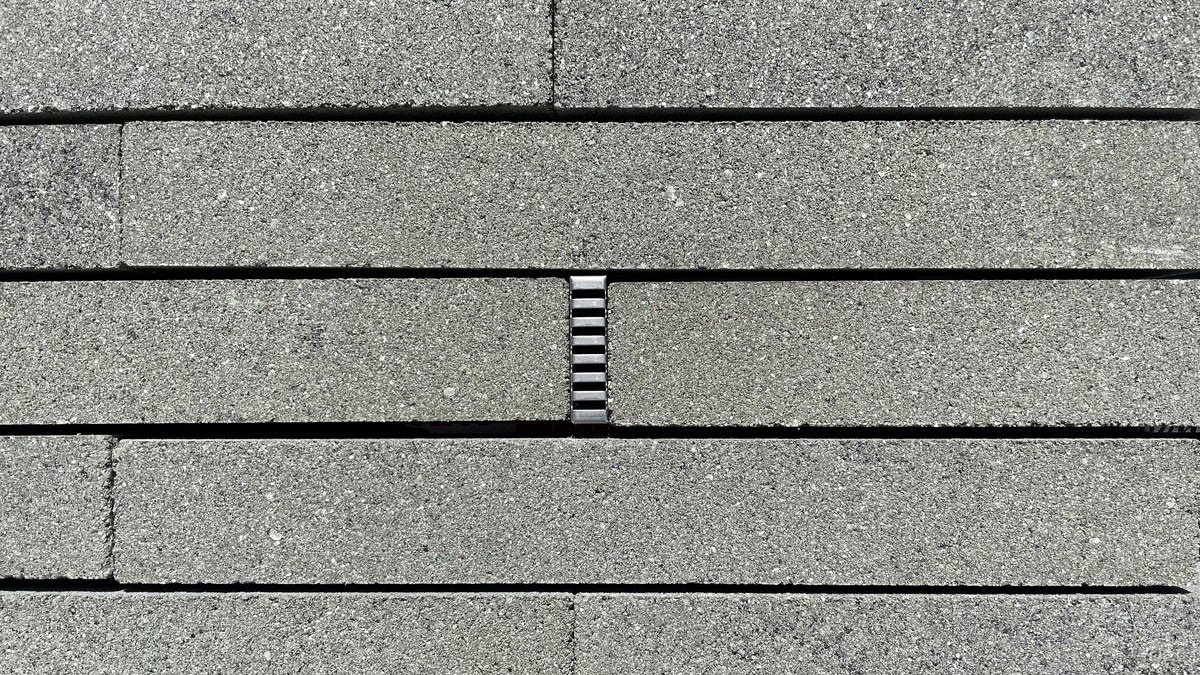
- Ventilation: Provide facades with sufficient ventilation openings, such as stainless steel joint grilles, to allow the cavity to dry properly. See our page on stainless steel joint grilles for more information about ventilation solutions.
- Detailing: Choose water-draining architectural solutions and prevent prolonged moisture accumulation.
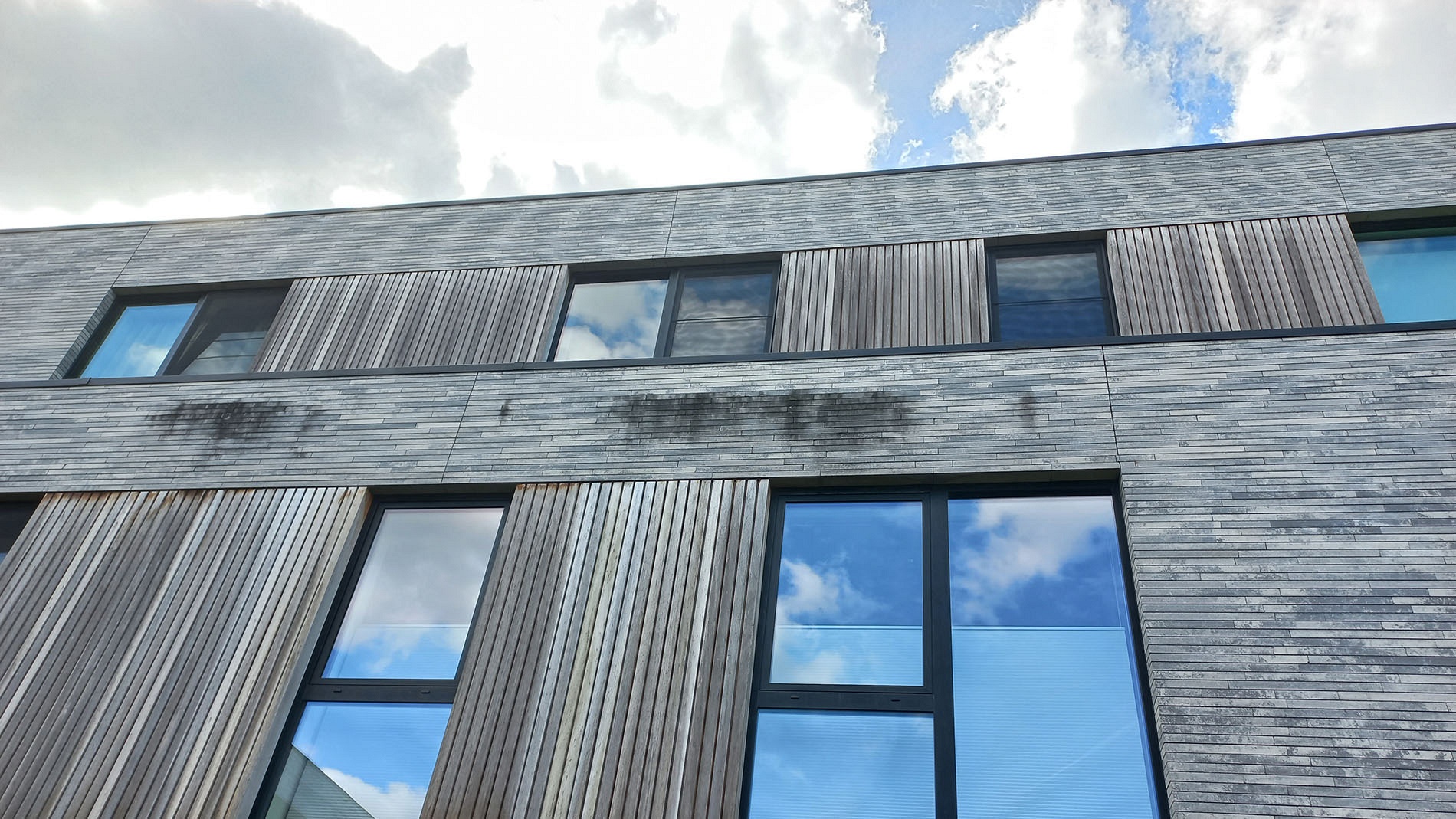
Moisture accumulation leads to green discolouration.
Some examples where moisture accumulation and concentrated water drainage regularly lead to green discolouration are:
- Rainwater splashing against the façade via the paving or top of the sun blinds.
- Rainwater that falls on the brickwork via large glass surfaces
- Flagpole holders, emergency overflows, ventilation openings, etc.
- The use of roll layers instead of good wall copings with sufficient overhang
- Poorly or insufficiently ventilated façade.
How to clean this dirt from the façade?
- Use a steam cleaner. The high temperature will remove and kill the algae.
- Use a (domestic) high-pressure cleaner. The nominal pressure should not exceed 140 bar and the minimum distance between the lance outlet and the stone should be at least 20 centimetres. Work carefully and systematically to avoid “zebra stripes”.
- Lithofin cleaning products can be used on our products and are available from your MBI dealer.
- For algae, they recommend Lithofin Terrace Cleaner.
- For moss and lichens, they recommend Lithofin MN Outdoor Cleaner.
Read more about pollution of façade brickwork
With the right approach, you can effectively control algae, mould and moss growth and extend the life of your façade.
Contact us
MBI offers a very wide choice for the design of indoor and outdoor spaces. Leave your details and we will contact you a.s.a.p..
.jpeg?1768921371)